
For professional hair removal, diode laser and IPL/SHR are both established light-based technologies, but they deliver energy differently. IPL uses broad-spectrum, multi-wavelength light, while a diode laser uses a more specific laser wavelength or a combination of wavelengths. For clinics that want a focused hair-removal platform with controllable parameters and strong treatment versatility, diode laser is often an attractive choice. For businesses that value a broader light-based platform and multiple aesthetic applications, IPL/SHR can be a practical option.
The right answer depends on the client population, treatment areas, operator training, desired workflow, cooling system, device specifications and local regulatory requirements—not on a single headline specification.
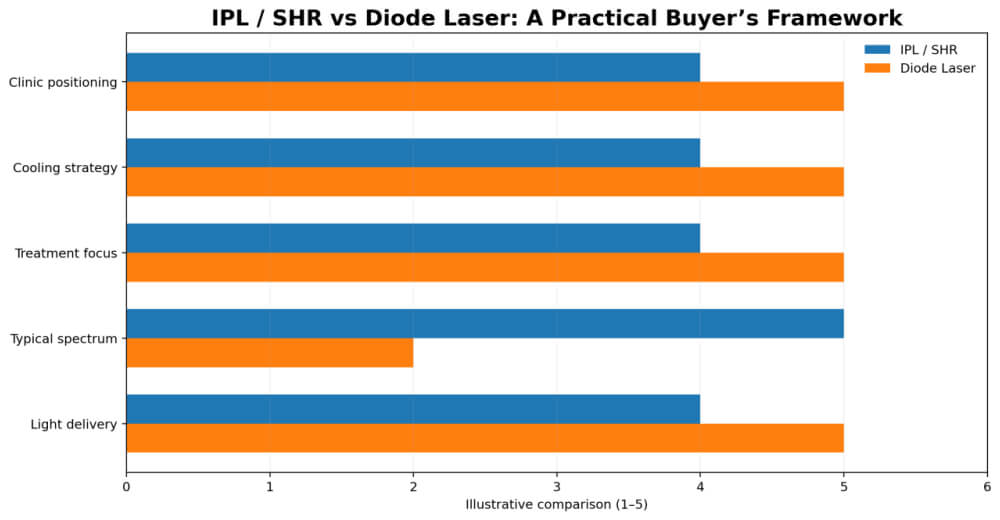
Figure 1. Practical decision framework for comparing IPL/SHR and diode laser platforms. The scores are illustrative, not clinical performance ratings.
Diode Laser vs IPL: The Short Answer
1. What Is the Difference Between Diode Laser and IPL?
A diode laser is a laser-based system that delivers energy at defined wavelengths. Huamei’s diode laser range includes professional systems designed for hair removal and, on selected models, skin rejuvenation. The company also offers triple-wavelength configurations that combine 755 nm, 808 nm and 1064 nm in one platform.
IPL, or Intense Pulsed Light, is different: it is a broad-spectrum light source rather than a single laser wavelength. Huamei describes its IPL/SHR systems as broad-spectrum platforms used for applications including hair removal and skin-related treatments.
- Diode laser: defined laser wavelength(s), focused energy delivery and a strong hair-removal positioning.
- IPL/SHR: broad-spectrum pulsed light, often positioned as a multifunctional aesthetic platform.
- Neither technology should be selected from wavelength alone; device design, cooling, pulse control, spot size, operator protocol and service support also matter.
2. Why Wavelength Matters in Hair Removal
Hair-removal devices work by delivering controlled optical energy to chromophores in and around the hair follicle. In practice, wavelength affects how deeply light penetrates and how it interacts with melanin-containing structures. This is why professional buyers should look beyond the phrase “laser hair removal machine” and ask what wavelengths are available, how they are combined, and how the system manages energy delivery.
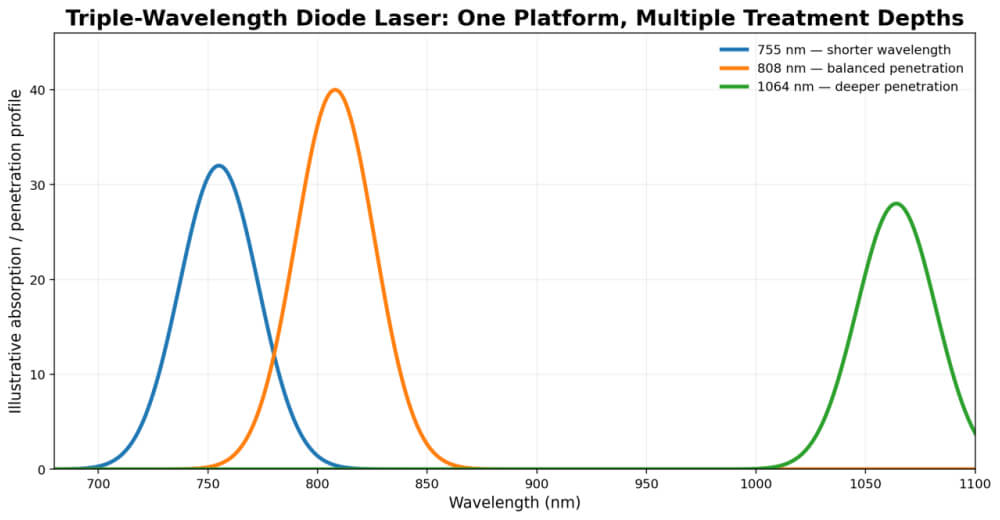
Figure 2. Conceptual view of the 755 / 808 / 1064 nm wavelength combination used in triple-wavelength diode platforms.
Image alt text: Conceptual wavelength chart showing 755 nm, 808 nm and 1064 nm as distinct treatment wavelengths; the curves are illustrative and not a clinical absorption graph.
A triple-wavelength platform can be attractive when a clinic wants one device that provides different wavelength options within the same treatment platform. Huamei currently lists diode systems using combinations such as 755 nm, 808 nm and 1064 nm, with cooling options designed to support a more comfortable treatment experience.
3. If efflorescence already appears: practical removal steps
Professional hair removal is not only about energy output. Cooling can help manage the skin’s thermal load and improve treatment comfort. Huamei highlights sapphire/contact cooling and other refrigeration approaches across its diode laser systems.
When evaluating a machine, buyers should ask: Is cooling continuous? Is the cooling interface designed for repeated passes? Can the operator maintain stable contact? Is the handpiece ergonomic? These practical details can influence the real-world treatment workflow as much as a headline power number.
4. Which Technology Should a Clinic Buy?
- Choose a diode-focused platform when hair removal is a core service and you want defined wavelengths, focused treatment parameters and a dedicated professional workflow.
- Consider IPL/SHR when your business model benefits from a broader light-based platform covering several aesthetic applications.
- Consider a multifunction system when equipment footprint, capital efficiency and service diversification are major priorities.
- For distributors, prioritize models with clear specifications, training support, spare-parts availability, documentation and a stable manufacturer relationship.
5. A Practical Buyer Checklist
-
Wavelength configuration and whether it matches your target client profile.
-
Cooling method, cooling stability and handpiece ergonomics.
-
Pulse width, fluence/energy settings and spot-size options.
-
Interface design, treatment presets and operator workflow.
-
Maintenance requirements, consumables and expected service support.
-
Regulatory documentation and certifications relevant to your market.
-
Manufacturer experience, R&D capability and customization options.
Huamei states that it has more than 20 years of manufacturing experience, 60+ certificates, 380+ patents and products/clients across more than 140 countries. It also offers customized equipment options for selected customers.
Suggested CTA
Looking for a professional hair removal platform for your clinic, salon or distribution business? Explore Huamei’s diode laser and IPL/SHR systems, compare configurations and contact the Huamei team for model recommendations based on your market and treatment goals.